

The Modern Child Is Overprotected and Underdeveloped
How modern society removed independence from childhood and then wondered why children stopped thriving

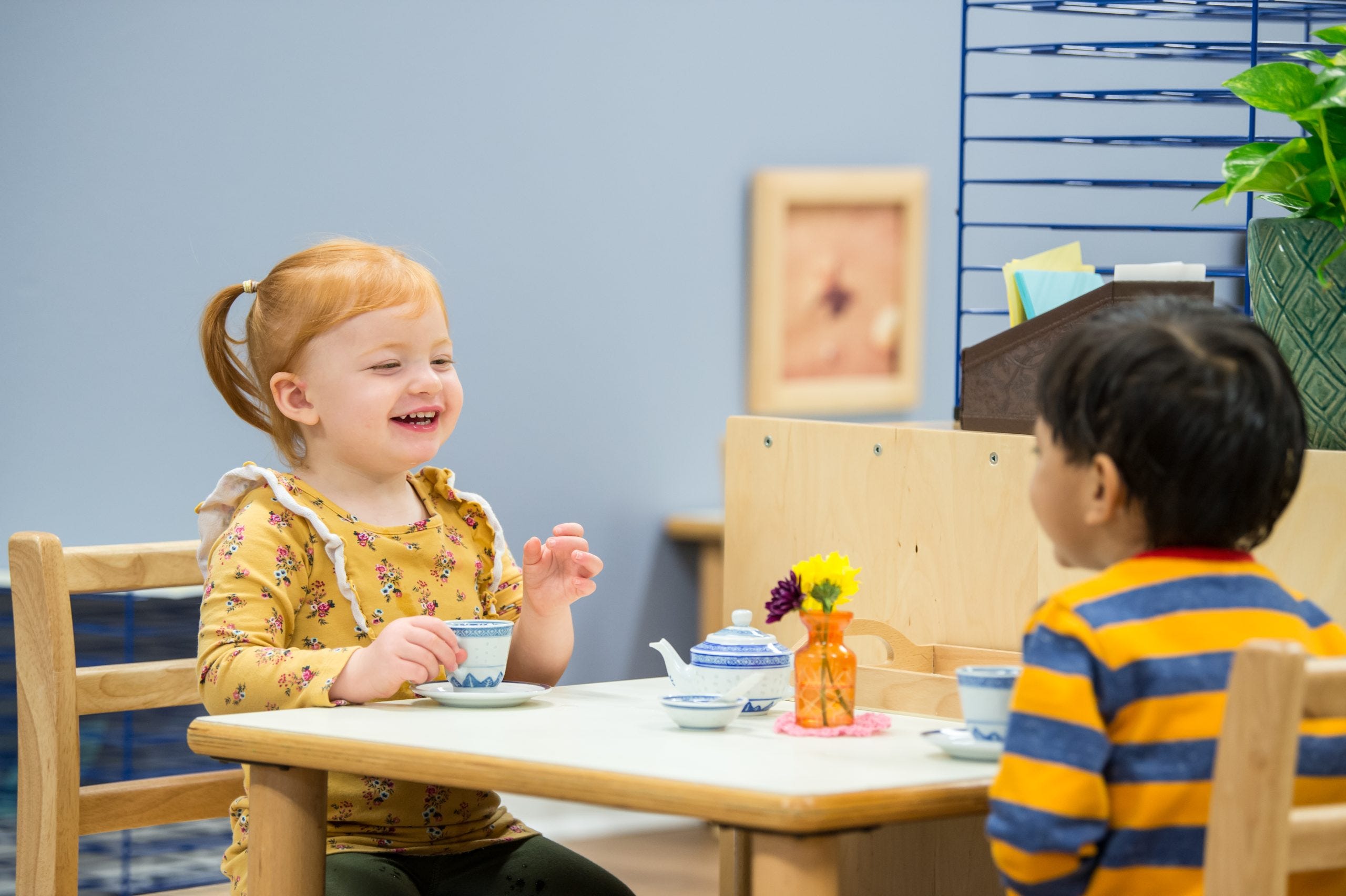
Overprotected children are quietly becoming one of the defining features of modern childhood.
Across much of the developed world, childhood is now safer, more supervised, and more carefully managed than at any previous point in human history.
Homes are engineered to reduce risk. Playgrounds are designed to prevent injury. Parents track their children’s movements through smartphones, monitor developmental milestones through digital tools, and structure daily life through carefully organized schedules.
From an adult perspective, these changes appear unquestionably positive. Few parents would willingly choose a more dangerous childhood for their children.
And yet something unexpected has begun to emerge within classrooms, pediatric clinics, and early childhood programs.
Teachers increasingly report that many children arrive at school less practiced in the ordinary competencies that previous generations developed naturally.
Tasks such as tying shoes, carrying personal belongings, pouring a drink, resolving small conflicts with peers, or persisting through a challenging activity are no longer developmental givens.
This does not reflect a decline in children’s intelligence or curiosity. Children remain as capable as they have always been.
What has changed is the environment in which childhood unfolds.
In attempting to protect children from every difficulty, modern society may have unintentionally created a generation of overprotected children who encounter fewer opportunities to practice independence. Children today may be safer than any generation before them, but many are also less practiced at navigating the small challenges through which competence develops.
The modern child, in other words, is often overprotected and underdeveloped.
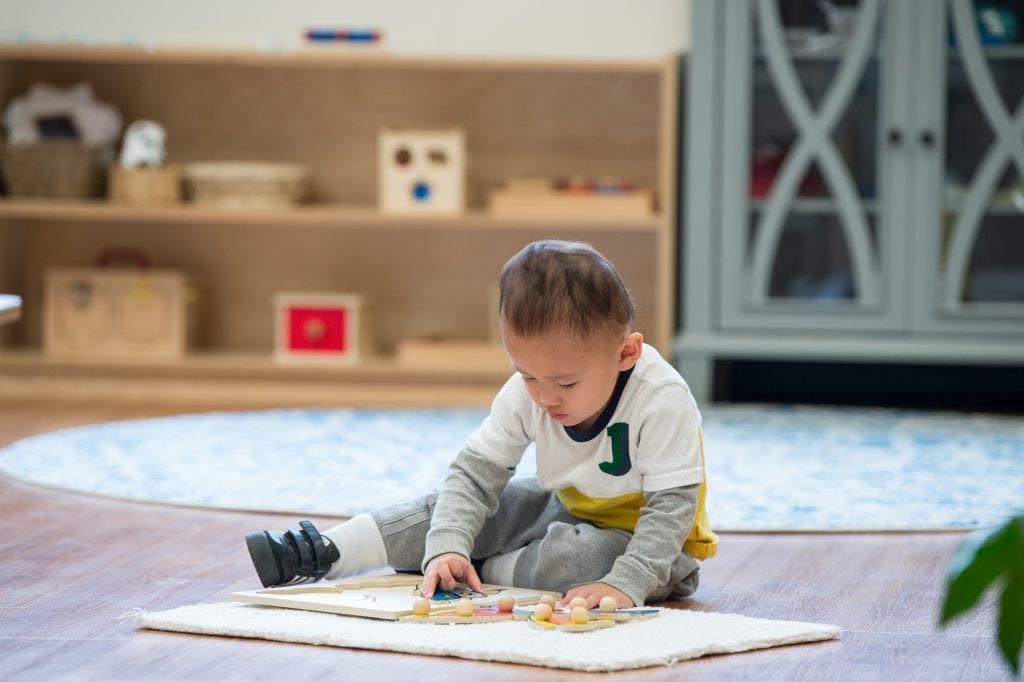

Childhood once meant participation
For most of human history, childhood was not a carefully insulated stage of life separated from the practical rhythms of society. Children were not spectators of adult activity. They were participants within it.
Anthropological research across cultures consistently demonstrates that children naturally integrate into the work of their families and communities. They assist with household tasks, care for younger siblings, gather materials, and gradually assume responsibilities appropriate to their developmental abilities.
Far from resisting these expectations, children frequently show enthusiasm for participating in meaningful activity.
Anthropologist David F. Lancy documents this pattern across cultures in The Anthropology of Childhood, observing that children often seek opportunities to contribute to the activities they see around them.
Developmental psychology confirms the same tendency. In a widely cited study, researchers Felix Warneken and Michael Tomasello demonstrated that toddlers as young as eighteen months spontaneously assist adults with tasks such as retrieving dropped objects or opening cabinet doors.
The impulse to help appears not to be taught but to arise naturally within early development.
Anyone who has spent time with a toddler recognizes this instinct. A two-year-old observing someone prepare dinner rarely wishes to sit quietly nearby. They want to stir the bowl. They want to carry the spoon. They want to participate.
Children do not naturally aspire to be passive observers of life.
They want to be part of it.

Montessori’s radical observation
More than a century ago, Italian physician and educator Maria Montessori began studying children with unusual attentiveness. Rather than imposing rigid teaching methods, she carefully observed how children behaved when given freedom within a thoughtfully prepared environment.
What she discovered challenged many prevailing assumptions about childhood.
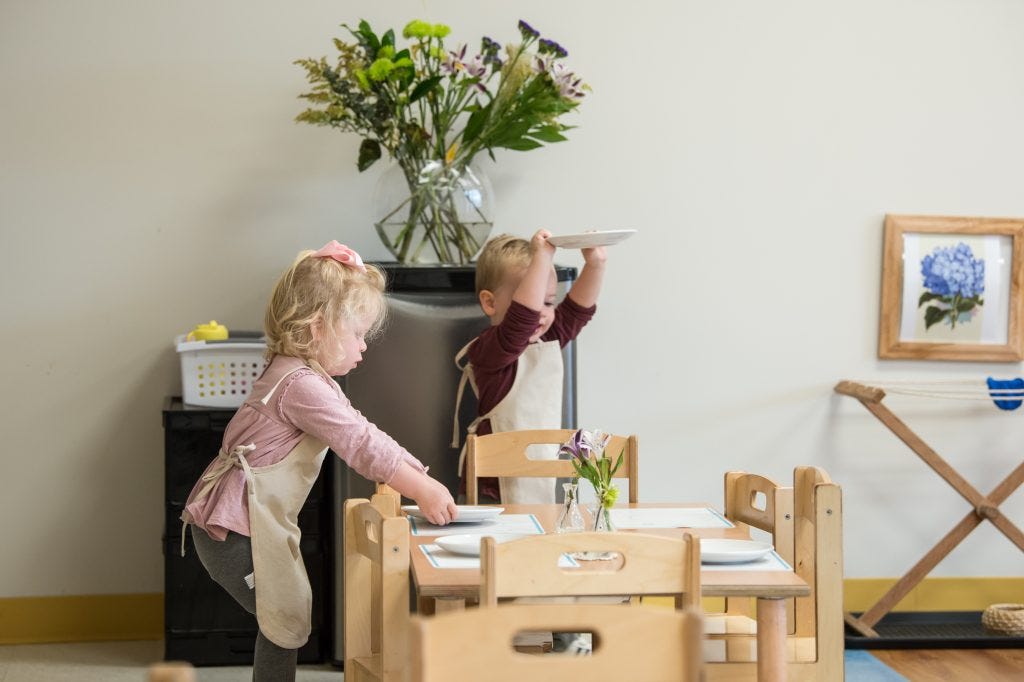
When children were offered the choice between passive entertainment and purposeful activity, they consistently chose the latter. They preferred washing tables, polishing objects, preparing food, arranging flowers, and caring for their surroundings.
Montessori concluded that children possess an intrinsic drive toward independence.
In The Absorbent Mind, she described the child as a being engaged in the profound work of constructing their own capabilities.
“The child’s conquest of independence begins with the first act of feeding himself.”
— Maria Montessori
For Montessori, the small tasks of childhood were not trivial diversions. They were the mechanisms through which children gradually developed coordination, concentration, and confidence. Through repetition and effort, children built the internal structures required to function competently within society.
The child was not merely receiving education.
The child was actively building themselves.

The transformation of modern childhood
During the late twentieth century, however, the cultural structure of childhood began to change.
Technological convenience dramatically reduced the practical need for children’s participation in household life. Dishwashers replaced hand washing. Prepared foods replaced shared meal preparation. Labor-saving appliances reduced many of the everyday tasks through which children once participated in family life.
At the same time, parenting culture evolved toward increasingly structured forms of child-rearing. Sociologist Annette Lareau described this pattern as concerted cultivation, a parenting model in which adults deliberately organize children’s experiences in order to maximize developmental outcomes.
Activities became scheduled.
Play became supervised.
Conflicts became mediated by adults.
These changes were driven by care and good intentions. Parents sought to protect children from harm and provide them with opportunities for success.
But the unintended consequence was a profound shift in the developmental structure of childhood.
Childhood quietly moved from participation to management.
Within this new environment, overprotected children became increasingly common.

The rise of overprotected children
Researchers have begun to examine the developmental consequences of this transformation.
Psychologist Julie Lythcott-Haims argues that excessive parental management can limit children’s ability to develop autonomy and problem-solving skills.
Similarly, psychologist Peter Gray has documented a significant decline in opportunities for independent play and responsibility, suggesting that environments producing overprotected children may also contribute to increased anxiety and reduced resilience.
These findings align with psychologist Albert Bandura’s theory of self-efficacy, which emphasizes that confidence emerges through mastery experiences.
Children build confidence by attempting tasks, encountering manageable difficulty, and gradually improving through repetition. Overprotected children often experience fewer of these opportunities. When adults intervene too quickly or remove challenges entirely, children lose the chance to develop the internal belief that they can navigate the world independently.
Competence cannot develop without practice.
And practice requires space.
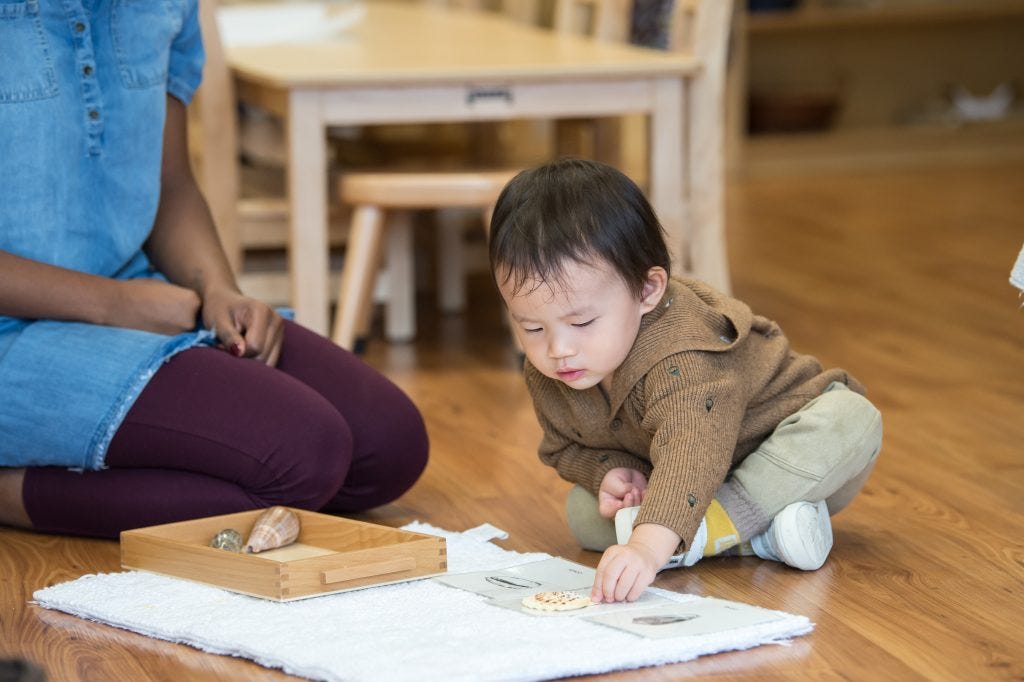

Montessori’s warning about unnecessary help
Maria Montessori understood this principle long before modern psychology articulated it.
She repeatedly warned that excessive assistance can interrupt the developmental process.
“Any unnecessary help is an obstacle to development.”
— Maria Montessori
Montessori also wrote:
“Never help a child with a task at which he feels he can succeed.”
These statements are often misunderstood. Montessori was not advocating neglect. She was advocating respect for the child’s emerging competence.
Overprotected children are rarely neglected. They are often surrounded by loving, attentive adults. Yet when assistance consistently replaces opportunity, children may lose the chance to discover their own capabilities.
Each small challenge matters.
Each solved problem builds confidence.
Each successful effort strengthens the child’s belief in their own competence.
The disappearance of dignity in childhood
What modern childhood may have lost is not merely independence.
It may have lost dignity.
Historically, children experienced themselves as contributing members of their families and communities. Even small responsibilities communicated a powerful message: your actions matter.
Preparing food.
Caring for materials.
Helping maintain shared spaces.
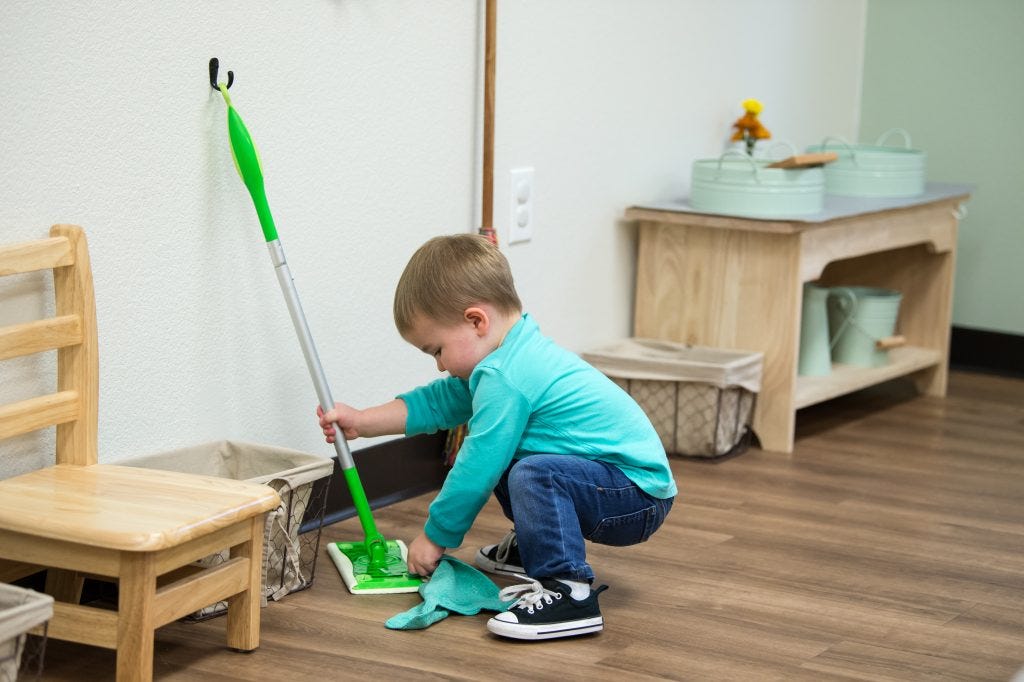
These activities allow children to experience themselves as capable participants in the world.
Overprotected children often encounter fewer opportunities for this type of participation. They are entertained, supervised, and scheduled, but they are less frequently invited to contribute to meaningful, every day work.
Childhood gradually shifts from participation to consumption.
Children become recipients of experiences rather than contributors to shared life.
And when contribution disappears, dignity often disappears with it.
The quiet revolution of Montessori education
This is why Montessori classrooms often feel unusual to visitors.
Very young children perform tasks many adults would normally do for them:
Two-year-olds put on their shoes.
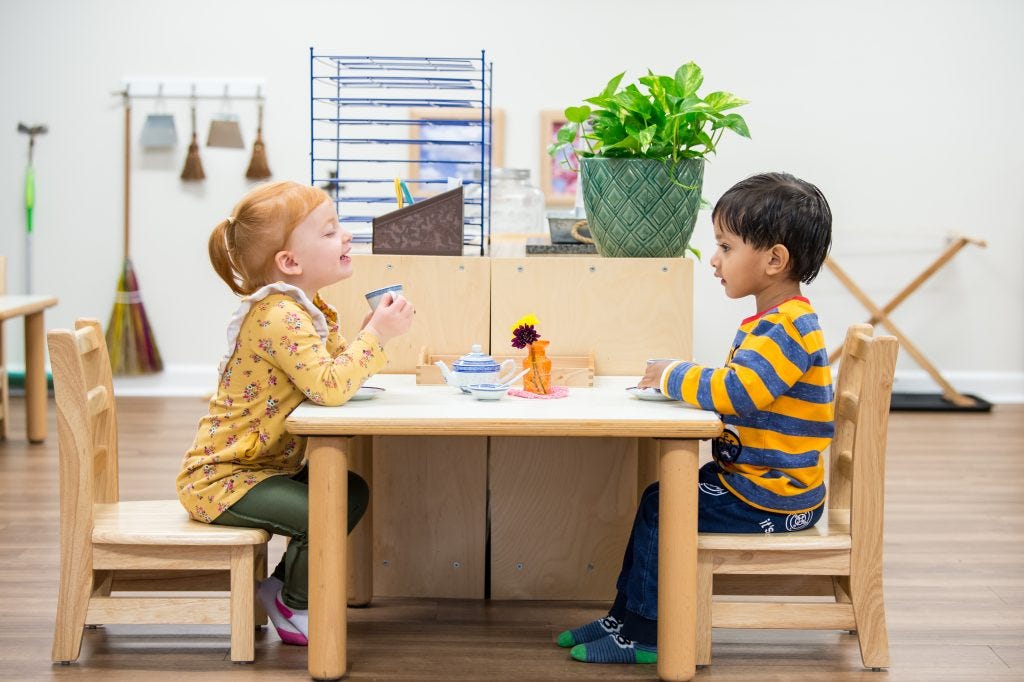
Three-year-olds pour water into glass cups.
Four-year-olds prepare snacks with knives.
Five-year-olds clean tables and care for classroom materials.
These activities are not symbolic exercises. They are real responsibilities within a carefully prepared environment.
Montessori environments operate on a simple but radical belief: children are capable of far more independence than modern culture typically allows.
When given the opportunity, children rise to meet that expectation.
In contrast to environments that produce overprotected children, Montessori environments intentionally cultivate independence.
And independence builds confidence.
The real purpose of childhood
Maria Montessori believed that childhood experiences shape the future of society itself.
In Education and Peace, she wrote that education must cultivate independence, responsibility, and self-directed action if societies hope to produce capable citizens.
“The child is both a hope and a promise for mankind.”
Children become capable adults not through instruction alone, but through years of lived experience navigating the world around them.
The purpose of childhood was never the elimination of every challenge. It was the gradual expansion of independence.
Modern societies understandably seek to protect children from harm. But when protection becomes excessive, childhood can shift toward environments that produce overprotected children who have fewer opportunities to develop competence through action.
Safety matters.
But independence matters just as much.
A healthy childhood requires both.
And when children are given the opportunity to participate meaningfully in the world around them, they almost always rise to meet that opportunity.
 | A guest post by
|
Totally agree on this