

Teacher Appreciation Week 2026
How Our School Communities Celebrated the Guides Who Make It All Possible

Teacher Appreciation Week comes every year, the first week of May, and every year there is a version of it that is purely performative. A mass-printed certificate. A fruit basket in the staff room. A social media post with a stock photo and a caption about heroes.
And then there is what happened across Guidepost Montessori campuses this past week. Which was something else entirely.
The People in the Room Every Day
Before getting into what the celebrations looked like, it’s worth pausing on who is being celebrated and why it matters so much.
In a Montessori environment, the teacher — called a Guide — holds a role that is genuinely different from what most of us experienced in our own schooling. They are not delivering a curriculum from the front of the room. They are observing. Preparing the environment. Reading each child’s developmental moment and deciding, dozens of times a day, whether to step in or step back. They are tracking individual progress across a mixed-age group, building relationships with children and families simultaneously, and doing all of it with a level of intentionality that is exhausting to describe and even more exhausting to actually do.
They are also the people your child runs to when something goes wrong at drop-off. The person who notices when your child seems off before you’ve had a chance to mention it. The adult who remembers that your child has been working on pouring for three weeks and quietly sets up the activity again without making a production of it.
That kind of presence is not something that can be automated or scaled or replicated by a worksheet. It comes from people who have chosen this work, trained for it seriously, and chosen to show up for it every single day.
Teacher Appreciation Week is a chance to say: we see that. We actually see it.


What Showing Up Looked Like This Year
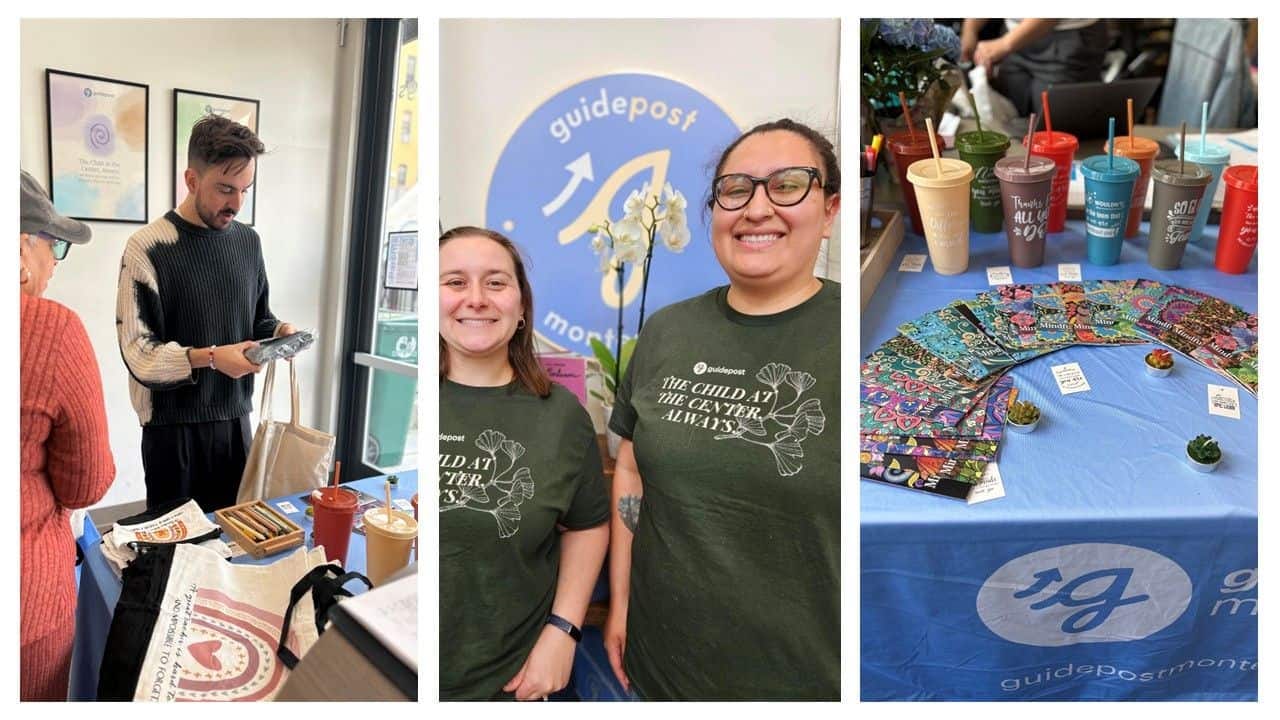
Across all of our Guidepost campuses, school communities organized celebrations that ran the full week, and what was striking was how much personality each one brought.
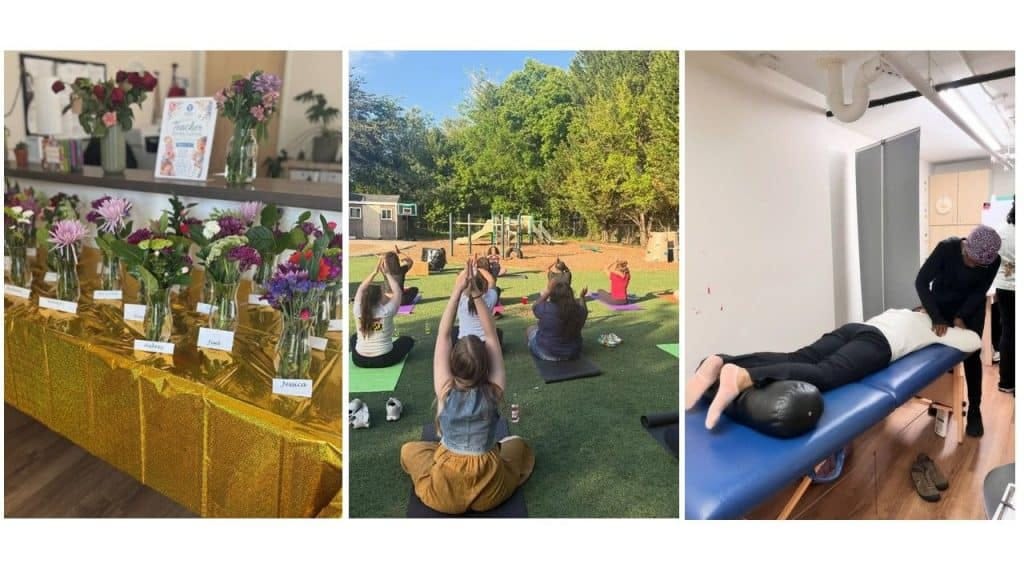
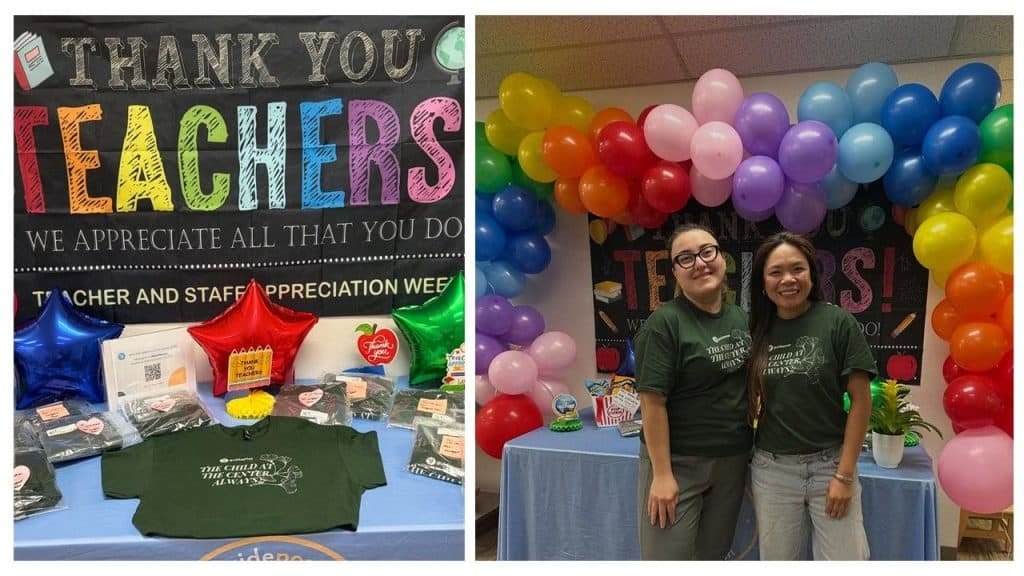
Guides arrived to find special t-shirts and swag waiting for them. Families organized meals and treats that showed up throughout the week (not just a single token gesture on Monday and then silence). There were coffee bars and mocktail carts. Food trucks. Community breakfasts where families and staff sat together. Yoga sessions. Massages. Flowers. Thoughtful decorations that made classrooms and staff spaces feel genuinely celebrated rather than hastily acknowledged.
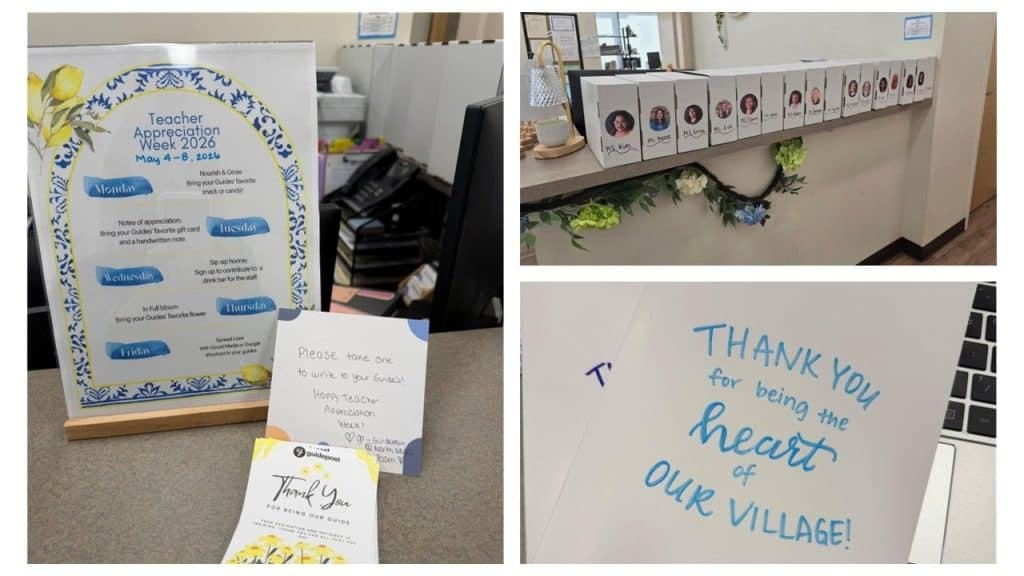
And then there were the handwritten notes. Personalized thank-you letters from families, from school leaders, from children who dictated what they wanted to say to their Guide and had a grown-up help them write it down. Those notes tend to be the ones that get kept.
Children participated too. Not as an afterthought but as genuine contributors to the celebration. They helped deliver meals. They joined in moments of recognition for the Guides who support them daily. Because when children are given the opportunity to express gratitude in a real and concrete way, they take it seriously. They understand, even at three or four years old, that their Guide matters to them.
What made it land was the care behind the planning. These were not obligatory gestures. School leaders and families put thought into what would actually feel meaningful to their specific Guides, in their specific community. And that intention was visible in every element.
Why Gratitude in Community Is Worth Practicing
There is a reason Montessori environments place so much emphasis on grace and courtesy, on teaching children from a very young age to acknowledge others, to say thank you with meaning, to notice when someone has done something for them. It is because gratitude is a practice, not an instinct. It has to be modeled and repeated and made visible before it becomes part of how a child moves through the world.
Teacher Appreciation Week, when done with real intention, is a masterclass in exactly that.
Children watching their parents organize a meal for their Guide’s classroom are absorbing something about what it looks like to care for the people who care for you. Children helping carry flowers or participating in a celebration are learning that appreciation is active, that it requires effort and presence. Children who see their school community rally around its educators are growing up inside a culture that values the people doing quiet, essential, unglamorous work.
That is not a small thing.
A Note to Parents
If you participated in Teacher Appreciation Week this year, in any capacity, whether you organized the whole thing or simply signed a card or dropped off a coffee, you did something that mattered more than you probably realize.
Teachers, and Montessori Guides especially, work in a profession that asks an enormous amount of them and does not always hand back equivalent recognition. The weeks where families show up with genuine warmth stay with educators for a long time. They are recalled on the hard days. They are part of what keeps great teachers in the classroom.
So if you were part of it: thank you.
And if next year feels far away, it isn’t. The relationships you are building with your child’s school community happen week by week, in small moments.
Teacher Appreciation Week is the concentrated version of something that can be practiced all year. A note. A specific acknowledgment of something a Guide did that mattered. Letting them know you see the work.
Your child is watching how you do it. And they are learning.
If you get the chance to look at my blog on the topic of child online safety and help amplify it would really mean the world.
The algorithm doesn't tend to assist such topics and I feel it would really suit your audience in the parenting realm.